
2026-10-06 · Robert "Rob" Sanchez
Checking For Mud Tubes Around Orlando Foundations After Heavy Rain
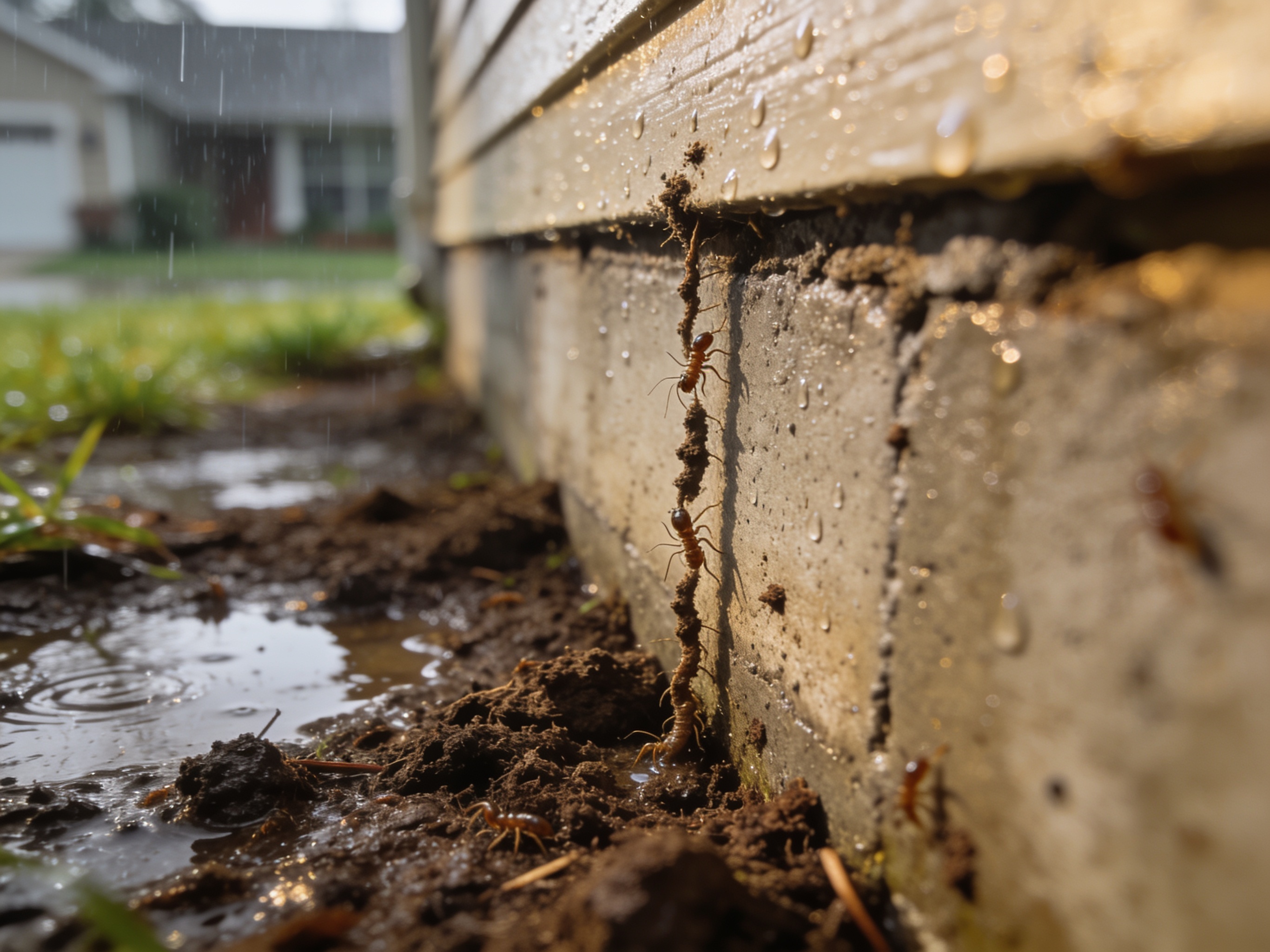
Following the heavy rains that frequently drench Orlando 32828 and its surrounding neighborhoods like Waterford Lakes and Avalon Park, homeowners should conduct a thorough inspection of their property's foundation for mud tubes. These pencil-thin tunnels, typically 1/4 to 1 inch in diameter, are constructed by subterranean termites to protect themselves from predators and dry air as they travel between their underground colonies and your home's wooden structures. The increased ground moisture from heavy rainfall creates ideal conditions for these termites to expand their foraging tunnels, making post-rain inspections particularly critical. Finding mud tubes indicates an active termite infestation that requires immediate attention to prevent significant structural damage.
Why Heavy Rains Increase Termite Activity Near Foundations
Orlando's subtropical climate means we experience significant rainfall, especially during the summer months. This consistent moisture, combined with the sandy soils prevalent across the 32828 area, creates a perfect environment for subterranean termites. Heavy rains saturate the ground, making it easier for termites to tunnel and forage closer to the surface and, consequently, closer to your home's foundation. The water can also wash away existing chemical barriers, if present, or create new pathways for termites to access your home. Termites are constantly searching for new food sources, and a saturated foundation perimeter, particularly in homes built on slab foundations common in areas like Union Park, can be a prime target.
The damp conditions also soften wood, making it more appealing and accessible to termites. Homes in older neighborhoods, which might have some decaying wood elements or consistent moisture issues around their foundations, are especially vulnerable. Understanding this dynamic is crucial for homeowners in the Orlando 32828 area, as it highlights why post-rain inspections are not just a good idea, but a necessary preventative measure against costly termite damage. For more on local risks, see our article on Termite Risks For Homes Near Orlando Wetlands And Retention Ponds.
Where to Look for Mud Tubes Around Your Foundation
When inspecting your foundation after heavy rains, focus on areas that are consistently damp or have direct contact with the soil. Subterranean termites prefer dark, moist environments, so these are their prime pathways. Start by examining the exterior foundation walls from the soil line up to at least 2 feet. Pay close attention to cracks in the concrete, expansion joints, and any areas where utility lines (water, electrical, gas) enter the home. These small openings provide excellent entry points for termites.
Next, check around porches, patios, and concrete slabs that are adjacent to the main structure. Termites can build tubes unseen beneath these structures and emerge through small cracks. Don't forget to look inside crawl spaces if your home has one, as these offer ideal conditions for termite activity. Finally, inspect any wooden elements that are in direct contact with the ground, such as door frames, window sills, or deck supports. Even a small piece of wood can provide a bridge for termites to access your home. For a detailed guide on what to look for, visit our page on Termites Around Foundation.
What Mud Tubes Look Like and How to Identify Them
Termite mud tubes are distinct and relatively easy to identify once you know what to look for. They are typically made of soil, wood particles, and termite saliva, giving them a muddy, earthy appearance. Their color usually matches the surrounding soil, which helps them blend in, but they will stand out against concrete or painted surfaces. The tubes can vary in size, from thin, pencil-lead-like exploratory tubes to thicker, more established foraging tubes that can be 1/2 inch or more in diameter.
There are generally three types of mud tubes: working tubes (larger, used for active foraging), exploratory tubes (thinner, built by termites searching for food), and drop tubes (extending from wood down to the soil). If you find a mud tube, gently break off a small section. If you see tiny, pale, ant-like insects scurrying away, you have an active termite infestation. If the tube is empty, it doesn't necessarily mean the termites are gone; they might have simply abandoned that particular pathway for another, or it could be an older, inactive tube. Either way, the presence of tubes indicates past or present termite activity.
What to Do if You Find Mud Tubes
If you discover mud tubes around your Orlando 32828 foundation, the most important step is to avoid disturbing them excessively. While it might be tempting to knock them down, doing so can cause the termites to retreat and build new, often hidden, tubes in other areas, making detection and treatment more difficult. Instead, make a note of their location and take photographs. The presence of mud tubes is a strong indicator that you need a professional termite inspection.